 Dragon Down Saga: Salman Younis
 Try the $1 Trial for Smart Credit.
 Follow Adswedmedia
 Risky Roller CPE US iOS
 Tier1 Umberlla Escape [AOS]
 Clumsy Arrow CPE US iOS
 US Rocket Hit (Android)
 SwedPlay
 CA BestPlay [iOS]
 Tier1 Marble Zig Zag [AOS]
 FaucetLab – Play Games, Earn & Withdra...
 Multigeo War Thunder 2023 [WEB]
 Adswedmedia Offers
 Cash4Quests - Earn Rewards for Games,...
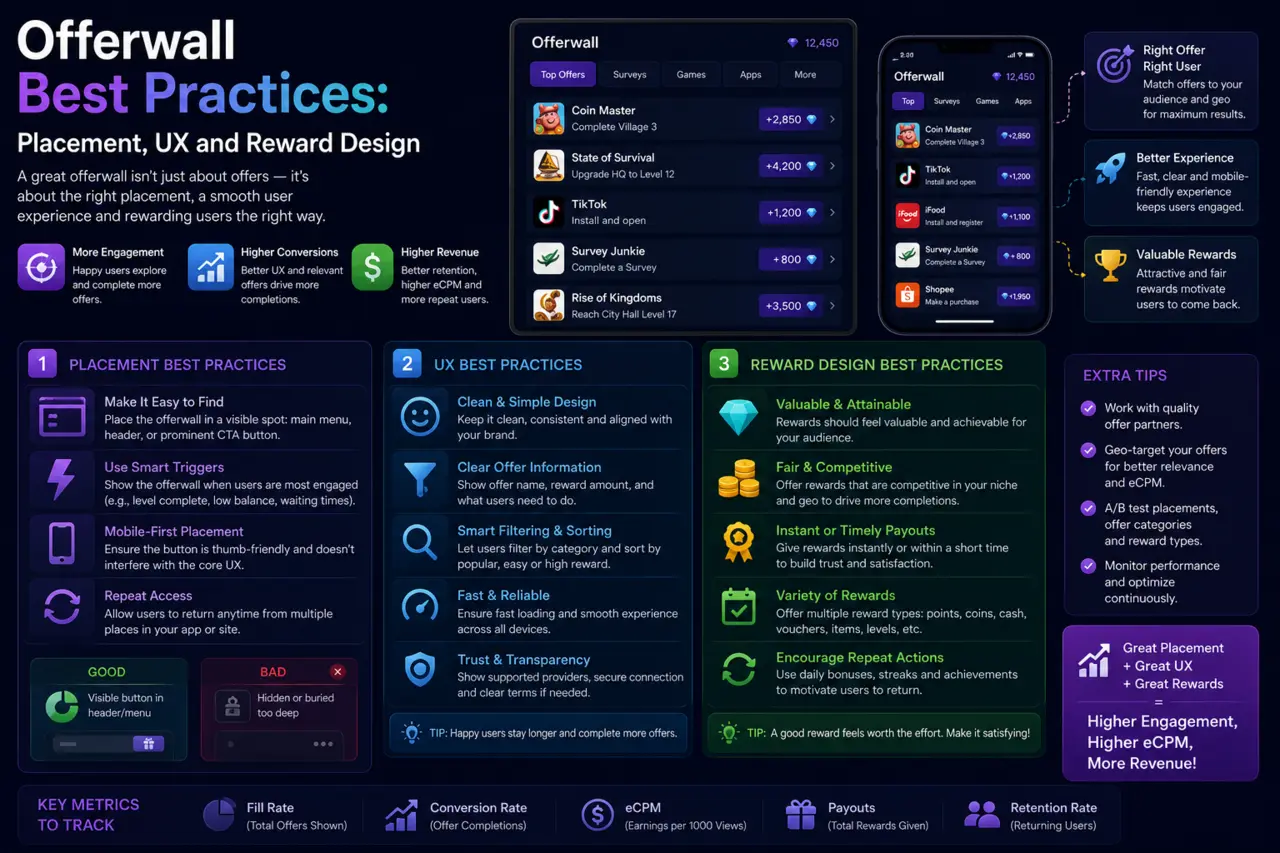
Two publishers with identical traffic can earn very differently from the same offerwall — the difference is placement, UX and reward design. These are the practical best practices that separate a wall people use from one they ignore.
1. Place the wall at moments of intent
The best time to show an offerwall is when a user wants currency. Surface it exactly then:
- When they run out of coins, gems or credits.
- At a level gate or a "need more to continue" moment.
- On the wallet, cash-out or store screen.
- As a clear, permanent "Earn free rewards" entry point in your navigation.
A wall buried three taps deep earns a fraction of one placed at the point of need.
2. Make the entry point obvious and honest
Use a clear label ("Earn coins", "Free rewards") and set accurate expectations. Over-promising ("Earn $100 in minutes!") destroys trust and increases charge-related complaints. Honest framing keeps completion and retention healthy.
3. Design rewards that convert without killing margin
Reward design is a balance. Too small and nobody completes offers; too large and you erode your margin. Best practices:
- Tie the user reward to a consistent fraction of the payout you receive.
- Test reward levels in small steps and measure completion rate, not clicks.
- Highlight higher-value offers so users self-select into the ones that pay you most.
- Credit rewards instantly via postback — delays kill trust.
4. Keep the wall full and relevant
An empty or irrelevant wall is a dead placement. Localize offers by country and device so every user sees something worth doing — see offerwall localization. Variety (surveys, installs, sign-ups, purchases) means more users find a fit.
5. Protect the reward economy
Instant, tamper-proof crediting is great UX — but only with fraud controls behind it. Validate postbacks, deduplicate transactions, and monitor reversal rates so realized revenue stays close to gross. See fraud prevention.
6. Measure the right things
| Metric | Why it matters |
|---|---|
| Completion rate | The truest signal that placement and rewards work. |
| eCPM (realized) | Yield after reversals — compare placements fairly. |
| Fill rate by geo | Whether users actually see usable offers. |
| Repeat completion | Whether the wall drives retention, not just one-offs. |
7. Treat it as ongoing optimization
An offerwall isn't "set and forget". Review segments weekly, test one change at a time (placement, reward level, offer mix), and keep what lifts realized eCPM. Small, compounding improvements beat occasional big rewrites.
Frequently asked questions
Where should I place the offerwall?
At moments of intent — when users run out of currency, at level gates, and on wallet or store screens — plus a permanent "Earn rewards" entry point in navigation.
How big should the reward be?
Enough to motivate completion while preserving your margin. Tie it to a fraction of the payout you receive and test levels while watching completion rate.
Why do users abandon the wall?
Common reasons: an empty or irrelevant wall (poor fill), device-mismatched offers, unclear rewards, or slow crediting. Fix fill and instant crediting first.
How often should I optimize?
Review weekly and change one variable at a time so you can attribute the effect. Keep changes that lift realized eCPM and retention.
Put these into practice. Launch your offerwall with AdswedMedia and optimize placement, rewards and fill from a single dashboard.